Not All Sweetners are Built the Same !
| Feature | Sugar | Aspartame-Based Sweeteners | Sucralose-Based Sweeteners | Saccharin-Based Sweeteners |
Stevi0cal
Best Choice
|
|---|---|---|---|---|---|
| Natural or Artificial | Natural | Artificial | Artificial | Artificial | Natural – Plant-based sweetness blend |
| Calories | High | Very low | Very low | Very low | Zero–Very low |
| Blood Sugar Impact | High | Minimal | Minimal | Minimal | No Impact |
| Suitable for Diabetics | No | Yes | Yes | Yes | YES ✅ |
| Tooth Decay Risk | Can contribute to tooth decay | Tooth friendly | Tooth friendly | Tooth friendly | Tooth friendly |
| Taste Profile | Familiar sugar taste | Sweet, may leave aftertaste for some | Sugar-like sweetness | May have metallic aftertaste | Balanced, clean sweetness |
| Heat Stability | Excellent | Limited at high temperature | Good heat stability | Good heat stability | Good heat stability |
| Baking Friendly | Yes | Limited | Yes | Moderate | Yes ✅ |
| Caramelization | Yes | No | Limited | No | No |
| Keto Friendly | No | Maybe | Maybe | Maybe | Yes ✅ |
| Bulking Agent | Sugar | Maltodextrin, Dextrose, Lactose, Erythritol | Maltodextrin, Dextrose, Lactose, Erythritol | Maltodextrin, Dextrose, Lactose, Erythritol | Erythritol |
Know Your Ingredients
Learn about the natural ingredients in our products
A naturally occurring sweetener found in fruits like grapes and pears, and fermented foods like cheese and soy sauce. Belongs to sugar alcohols group. Provides very low calories, minimal effect on blood sugar, clean sweet taste. About 60-70% as sweet as regular sugar.
Sugar does more than provide sweetness. Without it, products become watery, thin, less satisfying, and difficult to cook with. Erythritol solves this by providing bulk and volume, better mouthfeel, sugar-like texture, stability in baking and beverages, and very low glycemic impact.
Natural fermentation process:
Step 1: Corn is processed to obtain natural glucose.
Step 2: Natural yeast-like microorganisms ferment the glucose (similar to how yogurt is made, bread rises, fermented foods are produced).
Step 3: Erythritol is purified and crystallized into the final sweetener.
Quickly absorbed in the small intestine. Not significantly broken down for energy. Around 90% is not digested and removed unchanged through urine. Very little reaches the large intestine, causing less gas and bloating compared to other sugar alcohols.
Sugar-like texture, very low calorie, very low glycemic index (around 1), keto-friendly, tooth-friendly, suitable for sugar-free formulations. Widely used in sugar-free sweeteners, keto products, diabetic-friendly foods, sugar-free desserts, beverages and bakery products.
Plant-based sweetener from leaves of Stevia rebaudiana plant. Provides sweetness with zero calories, no impact on blood sugar, plant-based origin. 200-300 times sweeter than regular sugar - only a tiny amount needed.
Naturally sweet compounds inside stevia leaves responsible for sweetness. Commonly used types: Rebaudioside A (Reb A), Rebaudioside M (Reb M), Stevioside. Different glycosides improve sweetness quality, sugar-like taste, and reduce bitterness.
Provides sweet taste with no calories, no glycemic impact, sugar reduction support, keto-friendly sweetness, diabetic-friendly formulations. Used in sugar-free beverages, sweetener sachets, jams and spreads, dairy products, bakery products. Often blended with Erythritol for a taste closer to sugar.
Water extraction process:
Step 1: Stevia leaves are grown and harvested.
Step 2: Leaves soaked in water to extract steviol glycosides (similar to brewing tea).
Step 3: Sweet compounds filtered and purified.
Step 4: Purified extract dried into powder and blended for use in foods and beverages.
Not digested like sugar. Steviol glycosides pass through the upper digestive system mostly unchanged. Gut bacteria convert them into steviol in the intestine, then naturally removed. Result: no calorie contribution, no effect on blood sugar, no glycemic impact.
Plant-based sweetener, zero calorie sweetness, non-glycemic, keto-friendly, suitable for sugar-free products, approved worldwide.
Stevia Myths — Busted
Separating fact from fiction.
Erythritol Myths vs. Reality
Reality: Erythritol is naturally found in pears, grapes, mushrooms, fermented foods, and even in the human body. Commercial erythritol is produced through fermentation of corn using yeast, similar to yogurt, vinegar, or citric acid. Fermentation is biotechnology, not "chemical poisoning".
Reality: Erythritol has a glycemic index of around 1 and has almost no impact on blood glucose and insulin levels.
- Used in diabetic foods, keto products, and reduced sugar formulations
- Unlike sugar, erythritol is not metabolized for energy
Reference:
Reality: Compared to other polyols, erythritol is best tolerated because around 90% is excreted unchanged and does not reach the colon.
Reality: "Sugar alcohol" is simply a category called a polyol — a carbohydrate. It does not mean alcoholic, intoxicating, or liver-damaging.
- Around 90% is undigested and excreted unchanged in urine
Reference:
Reality: Excess sugar intake is strongly associated with obesity, type 2 diabetes, fatty liver disease, dental caries, and metabolic dysfunction. Erythritol delivers sweetness, bulk, mouthfeel, freezing point control, and texture without the caloric load of sugar — especially useful in diabetic, keto, and reduced-sugar products.
Reality: Erythritol serves critical functional roles:
- Sweetness balancing
- Bulking
- Freezing point control
- Mouthfeel enhancement
- Flavour masking
Without bulk sweeteners like erythritol, many sugar-free products would taste thin, metallic, or incomplete. At Stevi0cal, functionality matters as much as sweetness.
Reality: Erythritol is approved by FDA, EFSA, Health Canada, and FSSAI. In India, erythritol is permitted in multiple food categories under FSSAI food additive regulations.
Reality: Recent studies observed an association between higher circulating erythritol levels and cardiovascular risk, but association is not proof of causation.
- Many participants already had obesity, diabetes, or kidney disease
- Studies measured blood erythritol levels, not necessarily dietary intake
- The body can naturally produce erythritol under metabolic stress
- More long-term human studies are needed
Frequently Asked Questions
Conversion Guide:
| 1 tsp Stevi0cal powder | = sweetness of 8 tsp sugar |
| 1 pellet Stevi0cal tablet | = 1 tsp sugar |
| 1 sachet | = 2 tsp sugar |
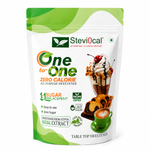
| 1 tsp Stevi0cal One to One | = 1 tsp sugar |
| 1 tsp Stevi0cal Desi Sweet Blend | = 1 tsp sugar |
| 5-6 drops Stevi0cal Stevia drops | = 1 tsp sugar |
We recommend starting with a smaller quantity and adjusting to taste.
Yes, Stevi0cal is suitable for low-carb and keto lifestyles. It contains no added sugar and has minimal blood sugar impact.
You can use it in:
- Keto desserts
- Beverages
- Baking
- Low-carb recipes
The carbs come from Erythritol, a sugar alcohol. Unlike regular sugar, erythritol is mostly not digested and excreted without being used for energy.
Under FSSAI guidelines, erythritol contributes zero calories, which is why the nutritional label shows carbs but no calories.
Yes, Stevi0cal is suitable for vegan and vegetarian diets. Both Stevia and Erythritol are plant-derived.
Perfect for:
- Keto desserts
- Beverages
- Baking
- Low-carb recipes
Yes, Stevi0cal dissolves easily in both hot and cold beverages, including:
- Tea
- Coffee
- Lemonade
- Smoothies
- Protein shakes
- Mocktails
- Homemade beverages
Enjoy all your favorite drinks with no sugar or extra calories.
Yes, Stevi0cal works wonderfully for traditional Indian sweets and desserts:
- Kheer
- Halwa
- Rabri
- Custards
- Mithai fillings
- Sweet beverages
Use a smaller quantity as Stevi0cal is much sweeter than sugar. Refer to our conversion chart for guidance.
Yes, Stevi0cal One-to-One works perfectly in cakes, cookies, brownies, and everyday baking.
Baking Tips:
- Bake at a slightly reduced temperature
- Reduce baking time if browning too quickly
- Add extra moisture (milk, yogurt, butter) for softer baked goods
The sweetness stays stable at baking temperatures.
Key Differences:
- Less browning (doesn't caramelize like sugar)
- Different texture (cookies may be crispier)
- Excellent in ice creams and milk-based desserts
- Dissolves better and faster than sugar in hot beverages
Regular sugar caramelizes at high temperatures. Erythritol (the bulking agent in Stevi0cal) behaves differently and doesn't caramelize the same way.
What to expect:
- Baked goods may remain lighter in color
- Syrups may behave differently
- Texture can vary in candies or desserts
This is completely normal for sugar-free sweeteners.
Not all stevia sweeteners are the same. Some taste bitter due to:
- Poor glycoside type
- Poor extracts
- High concentration
- Lack of flavor balancing
Stevi0cal carefully balances stevia with erythritol for cleaner, smoother sweetness with minimal aftertaste.
Together they taste better. Here's why:
- Stevia provides intense sweetness
- Erythritol adds bulk, balance, and sugar-like mouthfeel
Benefits of this combination:
- Reduces bitterness
- Improves texture
- Creates cleaner taste
- Makes measuring easier
Yes. Stevi0cal is made using Stevia and Erythritol, commonly used in sugar-free and diabetic-friendly products.
Neither impacts blood glucose levels, making them suitable for reducing sugar intake.
No. Here's why:
- Stevia is a high-intensity sweetener used in very small amounts
- Erythritol has a very low glycemic impact (GI around 1)
Both are widely used in sugar-free foods, beverages, and desserts.
Erythritol has no established ADI as it is safe for regular consumption within normal dietary limits. It is excreted through urine and well tolerated.
Consuming more than 50-60g in one go may cause mild digestive discomfort. Moderate daily use is absolutely fine.
Stevia has an ADI of 4 mg per kg body weight per day (as steviol equivalents).
Average adults can safely consume stevia-sweetened foods daily. Since stevia is intensely sweet, only a very small amount is needed, so most people naturally stay within the recommended limit.